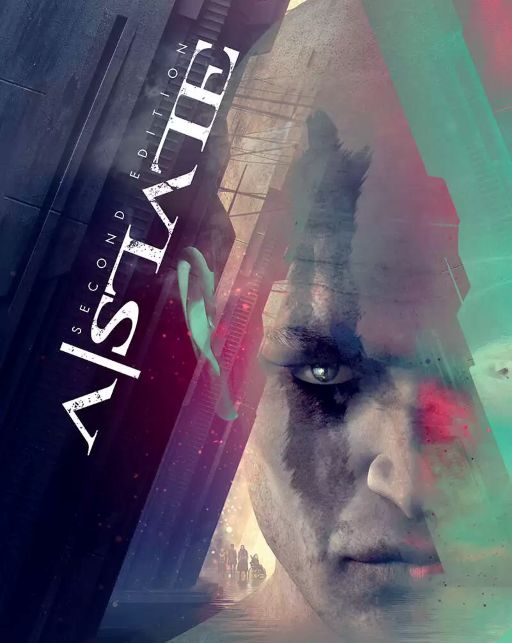
I’m the kind of GM who likes frictionless rules and plenty of texture: fiction first, mechanics that nudge rather than nag, and a setting that gives me a reason to care whether the power stays on in a tenement. Also, I am an unrepentant sucker for good art; this book is a stunner. Paul Bourne’s design and illustration (with Jon Hodgson, Gregor Hutton, and Scott Purdy) make The City feel damp to the touch, oily light, scabbed brick, and faces you’ll remember even if The City won’t remember you. The tone is set boldly, and the content warnings are up front about why: this is a world of exploitation, cruelty, and superstition, with no illusions about where power sits.
The Rules
a|state is Forged in the Dark with some purposeful tweaks. Actions are twelve broad verbs across three attributes (Insight, Prowess, Resolve). You roll a pool of d6s off the action that matches the fiction; highest die rules: 6 = success, 4–5 = success with consequences, 1–3 = trouble. Resistance always works (then you pay Stress), and the usual FitD economy of position/effect is re-articulated as a very helpful Risk/Reward Grid you literally move a marker around: low/risky/desperate on one axis, zero/limited/standard/great/extreme on the other. It’s tactile clarity: push yourself for +1d or +1 reward, accept “grief” for a bonus die, take setup from mates, or “go bigger/smaller” to trade risk for effect.
Consequences land with five flavours (reduced reward, complication, lost opportunity, increased risk, harm). Harm comes in levels (lesser/moderate/severe/fatal) and interacts with armour and resistance in the familiar way, only here, dripping with The City’s nastiness. Stress builds, Trauma bites (Cold, Haunted, Paranoid, etc.), and you’ve two ways to cool down: your chosen Escape in downtime, or that deliciously risky “let your guard down” moment during play that might remove 1 Stress… or open you to a GM complication. It’s an elegant temptation: breathe out or get knifed by pacing.
Structure-wise, play loops through Downtime to Mission to Fallout to Downtime, with Intrusions that crash downtime when the world won’t wait. The text walks you through engagement, teamwork, flashbacks, the lot. Then adds Noise & Attention to track how much heat your alliance attracts. Noise ticks up; when it overflows, Attention rises and factions start to care about you in ways you won’t like. It’s clean, legible pressure that turns your victories into bigger, noisier problems.
The other core dial is Hope, an alliance-scale score built from Morale and Resources tracks on your Corner sheet. Raise morale and resources and Hope ticks up (from 0 to 4); let them slide and the Corner sours. Hope isn’t a vibe. It’s more dice and leverage over your future. It’s the thesis of the game in a mechanic: win hearts, feed bellies.
And then there’s the Trouble Engine: a formal way for the GM to spin up and escalate the Corner’s problems. You’ll tick a Danger Clock during downtime, roll faction reactions keyed to the attention you’ve earned, seed local problems when Hope is low, and decide when crises hit. It’s equal parts weather report and incoming mortar. For tables that like to be surprised by plausibility, this is gold.
Finally, characters: there are seven playbooks (Activist, Dinginsmith, Ghostfighter, Lostfinder, Mapmaker, Sneakthief, Stringer), plus Trust rules that let you help mates for free once per cycle and, crucially, pressure those you trust. It’s gentle social engineering for a found-family crew, with the ever-present risk that family feuds, too.
The Setting
The City is rings of canals, tower blocks, mills, and myths, powered by bad electricity and worse fish oil. Trusts (capital-T corporations) loom; Churches sermonize; syndicates feed on desperation. Everyone is pressed flat by scarcity and regulation; the water is brown, the air tastes of metal, and most people never stray far from where they were born. It’s Dickens if Dickens had read M. John Harrison and taken a swim in a gasworks sump.
The book is generous: a Guide to the City, location gazetteers, factions from Arclight to The Three Canals Authority, and the eldritch rumours of the Shift and the Shifted. But it always yokes weirdness to human stakes: your Corner’s power outage matters more than a cosmic secret five wards over, unless that secret is why the power’s out.
What the designers are aiming at
The intent is explicit: “a circle of troublemakers… bring hope to one small corner of The City.” You’re not building a crime empire; you’re un-jamming a food queue, breaking a shakedown, outfoxing a Trust foreman, and coming home to actual faces who will be better or worse off depending on what you do. The formal scaffolding (Hope, Noise/Attention, Trouble Engine) hardwires that goal into play.
At the table this will mean high-urgency, low-prep missions with thick fallout. You’ll set risk/reward, bargain for grief (“fine, I’ll take a collateral fire for +1d”), push for effect, and then resist the fire because you remembered the orphanage next door. Downtime is consequential: long-term projects mend the Corner, Trust gets built, enemies sniff around, and that Danger Clock keeps ticking like a damp metronome.
If I were running it tomorrow (some scenario ideas)
“Fire in the Filaments”: Power cuts roll through Mire End. The Consolidated Power & Electrical Trust denies it’s them while a Third Church deacon blames “immorality.” Your crew must trace a stolen cable run through drowned tunnels, bargain with a Lock Keepers’ foreman, and decide whether to reroute juice from a ringship berth to keep your clinic freezers cold. Fallout: Noise with the Provosts, +Resources if you pull it off.
“Cold Meat, Warm Hands”: The abattoir’s off-books dog shipments are being skimmed, starving the Corner. The Whole City Mercantile brokers hired a Ghostfighter to keep the thefts quiet. Do you expose the Mercantile, cut a deal, or rob the robbers to stock your neighbours? Expect Trouble tags like Resource Crisis and Shakedown, and a rival faction’s “Very Helpful Visit” at the worst time.
“The Shifted Bargain”: A researcher offers medicine in exchange for… moving something no one should move. Accept, and your Hope could spike; refuse, and a rival takes the deal and poisons the well… literally. Either way, both morale and resources tracks twitch.
Unavoidable Comparisons
It wears its lineage openly: the book credits Blades in the Dark’s CC license and even nods to Paul Beakley’s position/effect grid (here, the play-mat Risk/Reward grid). If Blades is about crews thriving under vice, a|state is about communities surviving under pressure. Think Spire for angry social architecture or Dishonored for industrial grime, but point your compass due Neighbourhood not Heist.
So, who is this for?
If you like fiction-first systems where every die you roll points back to the scene, and you want rules that aim the whole table at human stakes, this is your pudding. The procedures for missions, fallout, and downtime do a lot of heavy lifting, so you can be confident that doing good (or at least doing less harm) has mechanical teeth. If you enjoyed Blades but wanted a moral centre, or you loved Urban Shadows’ clocks but wanted less politicking and more mending broken places, pull up a chair.
Given my tastes (low crunch, high consequence, settings that reward nosy GMs who like drawing maps of three streets and calling it a world) this hits the spot. The Hope track makes the Corner feel like a PC; the Trouble Engine keeps me honest; the Risk/Reward Grid keeps players and GM aligned on “how much this hurts if it goes wrong,” which is my favourite kind of alignment.
And who is it not for?
If your table wants personal power fantasy over collective resilience, you may bounce. If you need a sprawl-wide metaplot, this book prefers to give you a dock, three bridges, and six enemies with real reasons to hate you. If you’re allergic to FitD stress/trauma cadence or to the idea that sometimes the correct GM move is “advance a clock and make their lives worse,” look elsewhere.
Final Thoughts
a|state is a rare thing: a game that takes the FitD grammar and points the camera at the people who sleep under the neon rather than those who own it. The mechanics quietly but relentlessly ask, “Whose lives got better because of your last scene?” and then give you the tools to answer with dice, not just speeches. The art tells you what the air smells like; the rules tell you how much it costs to draw breath. For the right table, that’s more than enough reason to fight for a Corner that will forget them.
After all, the point is that we won’t forget