Every few months I get the itch for “my” post-apocalyptic game. I’m not looking for the one with gun-nuts in ice-cream vans or zombies in tactical vests, but something stranger: broken worlds, new cultures, weird ecology, big feelings about the end of everything and the awkward beginning of whatever comes next. Then I look at my calendar, sigh, and go back to running something with nice clean starter adventures.
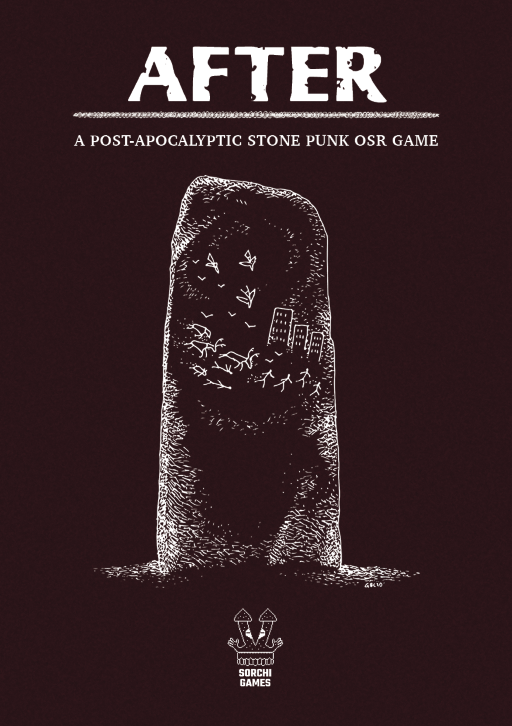
After leans hard into that itch. This isn’t “rusty guns and road warriors” or “the Fallout TV show but with more dice.” It’s a primal post-apocalypse: stone tools, rare iron, broken reality, clans in the pine forests and black pyramids sitting in the ruins where cities used to be. The designer describes it as “post-apocalyptic stone punk” and, for once, the punk bit isn’t just a spiky font. It’s very much a game of humans clinging on at the edge of an Earth that has moved on without them.
Post-apocalyptic media feels less like a thought experiment today than a genre of live news. Between climate dread, infrastructure creaking at the seams, and everyone quietly realising that maybe the algorithm is not our friend, there’s a real cultural charge to “we live in the ruins now.” After takes that energy, strips out the guns and petrol, and replaces them with dreams, Fractures in reality, and kids born with unsettling powers. It’s closer to weird pastoral horror than Mad Max.
Disclosure Update: I got sent a review copy of a different RPG called After and reviewed this one I already owned instead like an idiot.
Stonepunk Without Shotguns: How After Works
Under the hood, After is a lightish OSR-style d20 game. If you’ve played any D&D-ish thing in the last couple of decades, the basic chassis is comfortingly familiar: you have four broad General Attributes, you roll a d20, add modifiers, and try to meet or beat a target number. High rolls are good, low rolls are bad, and the GM calls for saves when something awful is about to happen to you.
The twist is what you’re rolling that d20 for. Characters are built around four Archetypes:
- Brawler: tough, direct, your “hit it with a rock until it stops” people.
- Thinker: crafters, teachers, the ones who actually understand what’s going on.
- Wanderer: scouts, hunters, the folk who go out into the wild and (sometimes) come back.
- Changed: the unsettling ones, born with access to the Art: not quite magic, not quite psionics, but definitely something that makes the elders nervous.
Each Archetype then has three lifepaths, little sub-concepts like the Beast, the Empath, or the Shaper for the Changed, which determine your starting Talents and how you use the Art. The Beast path is essentially “werewolf career progression”: heightened senses at first, more explicitly toothy and clawed nonsense later. The Empath and Shaper lean more into mental and reality-bending powers, with a mishap table for when the Art goes sideways, because of course there is.
The General Attributes do the usual work: one governs physical power and toughness (POW is called out explicitly in the text), another agility (important for initiative and not falling off things), with others covering mental and social competence. When you level up, you can bump an Attribute or take a new Talent. Talents are little feat-like powers; a Thinker can, for instance, spend Grit to comfort someone and remove fear penalties, which is the sort of ability that tells you what the game expects characters to be doing: not just fighting, but trying to keep each other functional in a quietly awful world.
Grit, Wounds, and Dying Slowly
HP in After are low. You start at around 10 plus your POW modifier, and gain a single point per level unless you invest in specific Talents. On their own, those numbers would make this a very short game, but there are two extra dials: Grit and Wounds. Grit is your expendable “push yourself” currency: you can burn it on things like special Talents, resisting fear, or otherwise hanging on when the world is telling you no. Wounds are a finite set of “I should be dead but somehow am not” slots. Hit 0 HP and you start spending Wounds; once you’re out of Wounds, you’re properly gone. Wounds don’t reset. When one is spent, that’s a permanent notch carved into your character’s story.
Combat uses a Difficulty Rank (DR), usually 12 plus the enemy’s Hit Dice. The GM just tells you “this thing is DR 14, 3 HD,” and you roll your attack against that number. All rolls are on the player side: you roll to hit, to dodge, to save, which keeps the GM’s mental load down and lets them concentrate on describing the horrors and the scenery. Initiative is a simple Agility roll; rounds, actions, and reactions look like you’d expect from an OSR game.
Non-combat tasks use the same d20 core but with degrees of success, meaning you get a bit more texture than “yes/no” for things like tracking, negotiating with a rival clan, or carefully poking a Fracture with a stick. That, plus Grit, gives you space for partial victories, costly successes, and “you did it but now you’ve really annoyed something” outcomes without needing a whole separate narrative subsystem.
Weapons and armour are largely defined by material rather than a long list of +1s. A stone spear might do decent damage but has a higher chance of breaking on terrible rolls; iron is sturdier and more effective, but rare and precious. Armour bumps up your defence and sometimes protects against environmental threats like cold, but full metal harness is basically a thought experiment. If you have that much iron, why are you wearing it instead of turning it into tools your clan actually needs?
Overall, the rules read as “trad but tuned for fragility.” You’re not meant to feel like wasteland superheroes. You’re clever, desperate people with sharp rocks, a handful of weird tricks, and a universe that is only intermittently convinced you should still exist.
Dreamwrecked Earth: Black Pyramids, Fractures, and Clans
The setting is where After really flexes.
The short version of the apocalypse goes like this: black pyramids appeared, one in every city on Earth. Then advanced technology died. Then the animals started fleeing into the cities and attacking at random. Then came the Flood. Not just “lots of rain” but a cascade of tsunamis, earthquakes, landslides, and other catastrophes that scrubbed the map clean. When the world finally stopped shaking, there were new, alien pockets of reality scattered across the land and a lot fewer humans to appreciate them.
Those pockets are Fractures, bounded areas where the laws of reality are wrong. The grass is the wrong colour. Sound behaves strangely. Time loops, or objects go unnervingly flat, or there are portals to somewhere even stranger. Inside Fractures live Fractureforms, the local flora and fauna, some of which occasionally wander out into the “normal” world. The hostile ones are called Abominations, which is exactly the sort of practical naming convention a traumatised species would adopt.
The book gives you a Fracture generator and examples of Fragments, portable bits of Fracture reality you can harvest and use, if you’re brave or foolish enough. There’s an example involving violet monoliths where sound becomes visible waves you can bottle and release later for distraction or spectacle, which is the most OSR thing I’ve read all week. It’s less “magic item shop” and more “what if reality glitches were a renewable resource with side-effects?”
Humanity survives in small clans out in the wilderness, specifically away from the old cities. The ruins are crawling with threats, both mundane and Fracture-adjacent, and the black pyramids themselves are opaque lumps of polished stone that reflect not who you are, but who you could be in some other, better world. Stand there too long staring at your reflection in the Pyramid and you come away discontented and weird. As metaphors go, it’s not subtle, but it is effective.
Technology tops out at cold-iron blacksmithing. Most tools are stone, bone, wood, or very crude metal. Good iron is rare enough to use as currency. Skilled blacksmiths and wilderness experts are vanishingly uncommon; between the initial die-off and the continual pressure of the new ecosystem, knowledge just… evaporated. Civilization keeps trying to get back on its feet, but anything too big becomes a target for the nastier elements of the new world.
Layered on top of this is the Changed: children born different, with access to the Art and a tenuous place in clan society. Some are feared, some revered, some used. The book leans towards Lovecraftian SF rather than high fantasy: the Art is a side-effect of whatever broke reality, not “classic spell slots with runes on.” The overall vibe is “haunted, half-understood science-horror filtered through a stone-age lens.”
The bestiary chapter, “Creatures and Places,” is about twenty pages of monsters and weird locations, with roughly thirty entries, some of which are intelligent species with their own cultures and city-like lairs. One of the friendlier peoples shapes stone via sound to build underground cities, and mostly wants to be left alone to eat fish. The art, by Sen Gaboc, is all sharp edges and surreal landscapes, appropriately dreamlike, given the whole setting grew out of the designer’s long-running dream journal.
It’s a very particular apocalypse. No rust, no mutants in the Gamma World sense, no bolted-on gun rules. Just spears, pine forests, alien entities, and a sense that Earth isn’t ours anymore.
How It Feels Like It Would Play
On the page, After looks like it wants you to run a fairly classic campaign structure: a home clan, immediate problems, and the wider weird world pressing in.
At the start, your group defines or adopts a clan, or at least a shared context: people from the same settlement trying to keep everyone fed, safe, and not eaten by Fractureforms. Player goals are tied to the clan’s survival and prosperity as much as individual ambition. There are tools to help you get going: NPC generators, a table of plot hooks (one example involves a series of cannibal attacks that might be the work of several outcast packs uniting under a leader), and terrain-specific encounter tables so that “we head into the forest” doesn’t become “we fight generic wolves again.”
Moment-to-moment, it looks like an OSR-adjacent wilderness and ruin-crawl. You’re choosing whether to risk a Fracture for the chance at a useful Fragment, whether to trade precious iron for help against an Abomination, whether to go near the Black Pyramid at all. The Grit/Wounds combo pushes towards cautious play with occasional desperate lunges; the fact that wounds don’t come back makes long-term survival feel precarious by design.
Where it differs from some older OSR fare is the tone and implied focus. Yes, you can play it as “murder-hobos in furs,” but the book keeps pulling you back to clans, relationships, and the psychological weight of the setting. There are no detailed rules for hex-by-hex kingdom building or tech trees; instead, you get lore about how communities function, what threatens them, and how the presence of the Changed or Fractures destabilises everyday life. The implied campaign is less “we clear the map” and more “we keep our people alive and maybe, slowly, learn what actually happened.”
From a prep standpoint, After feels like a mid-weight lift. You’ve got enough procedures (Fracture generators, encounter tables, those thirty-odd creatures and places) that you can spin up scenarios without inventing everything from scratch. But you do need to decide what your particular corner of the world is like, which clans are neighbours, and how much of the Black Pyramid meta-plot you want to surface. It’s not a plug-and-play adventure path.
The big question for me is whether the game’s mood and systems line up with what a group actually enjoys. After reads like it wants thoughtful, patient players willing to live with scarcity, weirdness, and loss. If your table is more “kick in the door, loot the glowing rock” than “weigh up whether this Fragment is worth bringing back at all,” you may need to calibrate expectations.
After vs After the War: Community on Different Frequencies
I’ve already written about After the War, which is also about rebuilding after a catastrophe, but in a very different key: refugees and aliens on Polvo, memetic horror from the Song, and a strong focus on trauma, Beliefs, and collaborative scene framing.
In a sense, both games are circling the same core question: “What does it mean to build a life after the worst thing has already happened?” But they tackle it from opposite ends of the design spectrum.
Rules and structure: After the War uses pooled d6s, Strain as both stress and pacing mechanism, and explicit scene-framing roles (Platform/Tilt/Question). It lives in that indie storygame space where Beliefs and character arcs are front and centre. After, by contrast, is trad-leaning: the GM frames situations, players declare actions, you roll d20s against DRs and let the fiction and numbers shake hands afterwards. If your group likes the security blanket of “AC, HD, attack rolls, saves,” After is the easier sell.
Community focus: After the War bakes community into the game via settlement creation, Faces, and a Plot Map of relationships and history threads. The mechanics constantly push you to care about what your actions mean for your home. After cares about clans and settlements in the fiction, but doesn’t give you the same level of mechanical scaffolding for long-term community development. You can absolutely run a clan-focused, politically tangled campaign, but the rules don’t track your settlement’s food or culture the way After the War or Mutant: Year Zero track Ark resources.
Tone: After the War is quietly hopeful, in a “we are all extremely traumatised but trying” way. There’s horror, but also community, compromise, and the possibility of healing. After feels more alienated and dreamlike; the world is actively hostile and fundamentally changed, and the best you can often do is survive a bit longer and learn a bit more. It’s not hopeless, the existence of the Changed and Fragments implies potential, but it is definitely weirder and colder.
If I want to run a campaign about a refugee town clinging on at the edge of space, politics and grief front and centre, After the War still has the edge. If I want to drop players into a pine-forested fever dream of stone tools, black pyramids, and bad psionics, After is the one that delivers that specific flavour.
After vs Out of the Ashes: Fantasy Aftermaths
Out of the Ashes, which I will talk more about soon as I’m hoping to play in a campaign of it soon, is billed as “community-based post-apocalyptic fantasy” where you play heroes rebuilding their world after the fall of a Dark Lord. It’s more explicitly fantasy (magic, named evils, gods and cults) and leans harder into the idea of rebuilding as a hopeful, even noble project.
Both games share an interest in small communities trying to survive in the rubble of something much bigger. Both want you to engage with what it means to rebuild, not just scavenge. But they sit on different points of the map.
Out of the Ashes is about redemption and civic imagination. Its systems support the long slow work of improving a settlement, dealing with neighbouring communities, and negotiating with the leftover horrors of empire and apocalypse. There’s more emphasis on alliances, faith, values, and the sense that, with enough effort, you might genuinely make things better.
After is, for lack of a better phrase, about endurance in the uncanny. The threats are less “returning Sauron stand-ins” and more “reality is cracked and sometimes the cracks grow legs and walk into town.” Community is still important, you’re fighting for your clan, not just yourself, but the tone is more “we survive in the shadow of things we don’t understand.” There’s less explicit mechanical support for upgrading your village hall, more for surviving weird trips into Fractures and coming back changed.
If your post-apocalypse tastes run to “softly hopeful fantasy of rebuilding,” Out of the Ashes is probably the better match. If you want huge pine forests, black pyramids, and the gnawing certainty that physics is only a local suggestion, After is the one you want.
Who After Is (and Is Not) For
So, where does this actually land for me, as someone with limited GM bandwidth and a frankly irresponsible number of unplayed games?
If you like OSR or OSR-adjacent systems; enjoy strange ecology, dreamlike logic, and worlds that feel properly other; want an apocalypse without guns and petrol and don’t mind characters who are fragile, scarred, and occasionally outmatched…then After is genuinely interesting.
The setting is the main draw: the Black Pyramids, Fractures and Fragments, the Changed, the sense that the world is both alien and familiar. It’s the kind of book you can mine relentlessly for ideas even if you never play it straight. I can see myself stealing Fractures and Fragments wholesale for other games; “bottle-able sound waves” is exactly the sort of oddity I want in my tool kit.
Rules-wise, it hits a sweet spot for trad-inclined groups that don’t want to learn a whole new narrative engine but do want something tuned for tension and scarcity. If your table likes rolling their own saves, making resource-driven decisions, and occasionally waving a spear at something that looks like it fell out of a particularly bad dream, they’ll be fine here.
However.
I don’t think After is the game that finally breaks my personal “post-apoc GM curse.” That probably still lives somewhere in the After the War / Mutant: Year Zero / Legacy: Life Among the Ruins triangle, where community procedures and campaign structure do more of the heavy lifting. After gives you plenty of flavour and enough tools to improvise, but it doesn’t hand you a clearly defined “this is how a campaign progresses” track in the same way, and that matters when you’re juggling work, family, and the rest of the hobby pile.
It’s also not going to convince anyone who bounces hard off OSR-ish deadliness or who really wants their apocalypse to have bullets and cobbled-together shotguns. If your group thrives on elaborate character builds, safety nets, and clear story arcs, the combination of fragile PCs and a setting that’s weird rather than melodramatic might feel unsatisfying. Equally, if you’re here for strong community-building mechanics, you may find yourself wishing the clan and settlement side had more mechanical heft.
For me, After is likely to live on the “idea mine” tier of the shelf. I could picture playing in someone’s short arc about a small clan forced to venture into a growing Fracture to retrieve a vital Fragment, or a doomed expedition to a Black Pyramid that leaves everyone a bit wrong. That’s a good place for a game to be. Not every book has to be the campaign engine for the next year.
If you’ve ever wanted to run a campaign where the apocalypse feels less like a genre convention and more like a broken fairy tale told by someone who’s still not sure why the world ended, After is worth a look. Just don’t stare too long at the pyramids.