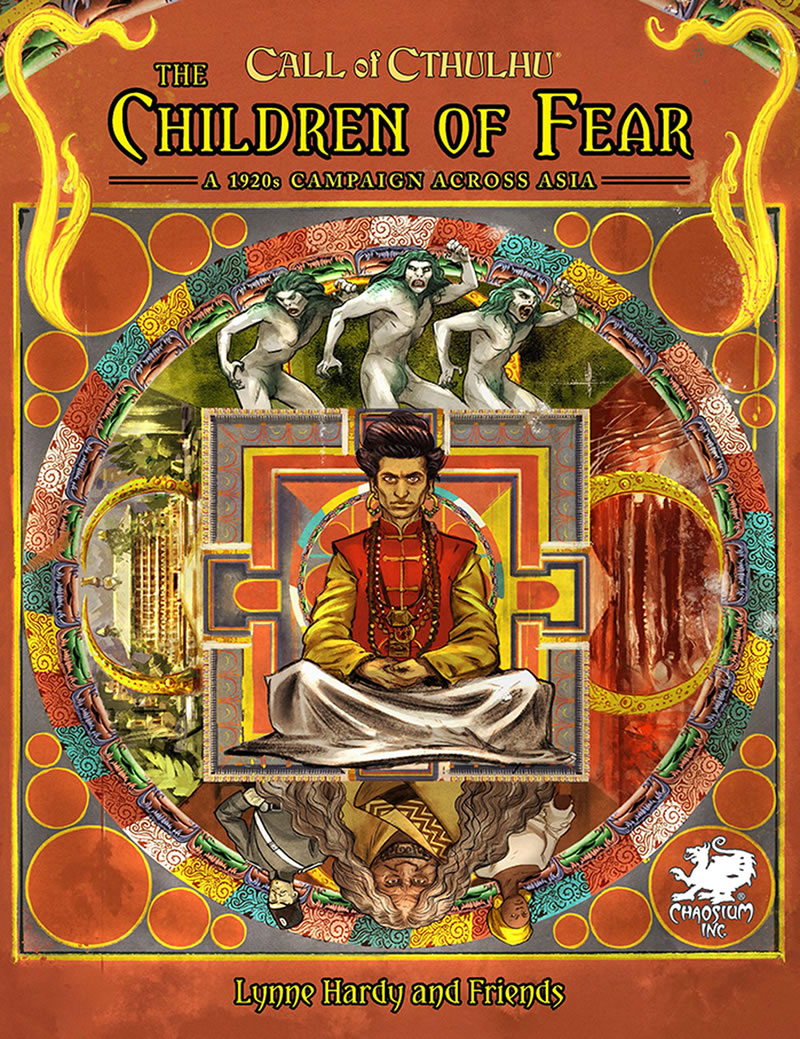
22–23 September 1923. Peking fell away behind the convoy under a low, rinsed sky, the city wall shrinking to a pale bruise against the rain. General Wu’s escort moved with competent purpose. Trucks that coughed and rattled, carts and canvas covers tapping like loose drumskins, flags snapping in the wet air. The investigators sat among baggage and soldiers and the practical clutter of travel, watching the land flatten out into ruts, reeds, and flooded culverts. It was the first time the expedition felt truly committed. There would be no easy return to polished hotel tables and controlled conversations. Out here, the road decided what happened next.
They didn’t get far before the question of authority asserted itself. At a flooded culvert a militia checkpoint waved the convoy down. The men were young, poorly uniformed, and armed with cheap rifles that looked as if they’d been handed down through three different wars. Their spokesman wore a red handkerchief over his mouth and nose, his boots soaked through, his confidence borrowed. He demanded papers without ceremony and carried them forward without explanation, focusing his attention more on General Wu’s soldiers than on the civilians who had suddenly become part of a military movement.
The investigators responded with a kind of practiced calm that came from having already learned, in the Legation Quarter, how quickly tone could become danger. They produced General Wu’s letter. On the surface, it should have been enough: ink, seals, the weight of a name. But the checkpoint men lied too quickly, claiming they served Wu when their bearing and their patchwork discipline said otherwise. Joe Morton, watching faces rather than weapons, could tell the story didn’t fit. These weren’t Wu’s troops. They were local militia wearing borrowed prestige like a coat that didn’t quite hang right.
For a moment, it wasn’t clear who commanded the situation. The militia weren’t demanding payment. They weren’t even haggling. They were assessing, measuring the convoy, the escort, the investigators themselves, deciding what they were looking at and what it might cost them.
In the end, the letter carried weight. The papers were returned. No toll was demanded. The convoy rolled on. It should have been a relief. It wasn’t. The absence of a price felt like its own kind of warning. A toll you pay is an exchange; being waved through is something else. It leaves the sense that the decision was never about money.
By late afternoon the road fattened into Chengchow, and the convoy threaded into a town that smelled of wet millet, coal smoke, and horse sweat. Courtyards churned with porters and tea boys. A telegraph ticked somewhere like an impatient insect. Camel bells passed under the inn’s eaves and a car backfired like a small war. The posting inn that took them in was modest but functional, the sort of place used to travellers who don’t ask too many questions and don’t want too many asked of them.
Even here, in the press of ordinary life, the investigators felt that recurring prickle. Someone close, just beyond the crowd, matching the rhythm of their breaths and then gone. The sensation didn’t resolve into a face. It didn’t even settle into a direction. It was simply presence, withdrawn the moment attention moved toward it, like a hand pulled from bathwater.
During the evening meal, the first clear sign arrived that someone else was paying closer attention than a roadside innkeeper ever would. A boy approached their table as if he belonged there, set down a kettle, and slipped a folded scrap beneath An Jinqiang’s chopsticks. The note only contained a smeared lotus stamped in cheap ink, no words. Before anyone could grab his sleeve or catch his eye, he vanished into the inn’s moving bodies as if he’d never existed.
The lotus is a generous symbol. It rises clean from muddy water. It speaks of endurance, awakening, transformation earned rather than granted. It can also mark a path. Sometimes one you choose, sometimes one chosen for you. The investigators turned the scrap over and over in their minds, weighing its meaning. Miriam, inclined toward structure and pattern, considered it possibly good luck. Others saw the sharper edge beneath the beauty. An identifier, a warning, a summons. Most unsettling of all was the specificity. The symbol had been delivered to An alone.
An Jinqiang’s response didn’t clarify anything. He didn’t recognise it as belonging to any group he knew, and he didn’t perform surprise. He received the message with the same quiet, controlled authority he had carried since joining the expedition. An authority that didn’t announce itself but somehow made others, even soldiers who didn’t know him, respond.
That night passed without incident, though not without restlessness. Chengchow’s sounds seeped through the walls. Coughs, distant arguments, the clatter of hooves. Sleep came shallowly. The road felt too awake.
At dawn they pushed on toward Sian. Steam ghosted from mules. The inn yard smelled of wet leather and lamp oil while teamsters cinched straps and soldiers checked rifle slings. Chengchow slipped behind a screen of damp willows, and the route narrowed to a raised causeway between paddies bright with reflected sky.
Before long, the convoy lurched to a stop. The lead vehicle, one of the cars at the front of the line, had sunk into mud where the road gave way to paddy field. The wheel sat in a seam of brown water and sticky earth, and the driver looked stricken, as if the entire expedition had become fragile and personal in that one small failure.
An Jinqiang didn’t raise his voice or give a speech. He simply stepped down into the muck and started directing hands and ropes with brisk certainty. Soldiers who had been sluggish a moment earlier moved faster without being told twice. Someone levered. Someone shoved. Someone cursed and laughed and then shoved again. The vehicle came free far sooner than it had any right to, and the convoy resumed, shaken but intact.
The long stretch west gave the investigators time to do what travellers always do when there is nothing to fight and nowhere to run. They watched, they learned, they practiced.
Joe used the jolting hours to work on his photography, taking shots where he could, trying to capture something honest in landscapes that kept shifting between beauty and threat. He also helped another member of the party, someone leaning into the more academic side of observation, practice reading reactions and body language. Out here, where papers could be forged and uniforms could be borrowed, understanding a person’s face mattered as much as understanding a map.
When they reached another checkpoint nearer Sian, the dynamic was different. These soldiers looked like they belonged to a real chain of command. Their weapons were carried with discipline rather than habit. When the investigators presented General Wu’s letter, the response was swift and procedural. Authority, here, was not a performance. It was infrastructure.
By late afternoon Sian’s wall rose out of the rain like the hull of a ship. The city wore the weather as a grey veil: slick brick, lantern light, steam breathing from shopfronts scented with spice and hot metal. The convoy clattered beneath the gate as the officer on duty tested the letter with a brief, intent stare, eyes moving from ink to faces, from faces to baggage. He asked the practical questions that always hide another question beneath them: where were they staying, and who vouched for them?
The investigators chose their answer carefully. Rather than lean entirely on Wu’s authority, they brought the name that mattered locally: Mi Han, Professor Wang’s contact. The officer accepted it without comment. That, too, carried weight. It implied Mi Han was known here, and known in a way that didn’t invite discussion.
And then the sky split. Lightning crashed close enough to make the air feel sharp, and thunder rolled through the wet streets like a judgment. In that crack of light, something else arrived, something that had nothing to do with weather and everything to do with the lecture hall in Peking and the sense of being handled by forces that didn’t need permission.
Several of the investigators were struck again by visions. Aiko later described a bonfire among trees, figures ringed around it, ash clinging to her shoes as if she had walked through the aftermath of ritual. An spoke of a ladder and birds at cave mouths, and something breathing out of darkness. Marcy saw catastrophe: a city burning, ash falling like snow, incense turning foul in her mouth.
Joe, for once, saw nothing. Miriam, too, experienced no vision in that moment and found no comfort in the absence. If anything, it sharpened unease. If some were being shown things and others were not, then the question wasn’t merely what was happening. It was why, and to whom.
By the time the convoy settled into the city, the investigators carried a fresh layer of quiet strain. Sian was a waypoint, not the destination, but the road had already begun to behave like something with a mind. They had been stopped and assessed by men who weren’t who they claimed. They had been marked, selectively, with a symbol that refused easy interpretation. The sky itself had punctuated their arrival with a reminder that whatever lay ahead wasn’t confined to Dunhuang. It was already reaching for them.
And as the lanterns flickered into life along the wet streets of Chang’an, it became harder to believe the expedition was simply travelling west. It felt, instead, as if the west was drawing them in.
Comments
2 responses to “Children of Fear – Episode #3”
Who is An Jinqiang? Where did he come from? And are you using Pulp Cthulhu?
Another PC that joined this week. I missed the introductions he made at the Hotel to the others in my write up. He’s a gangster boss in Peking who has connections with the Midnight Society.
This is classic CoC, not Pulp.